
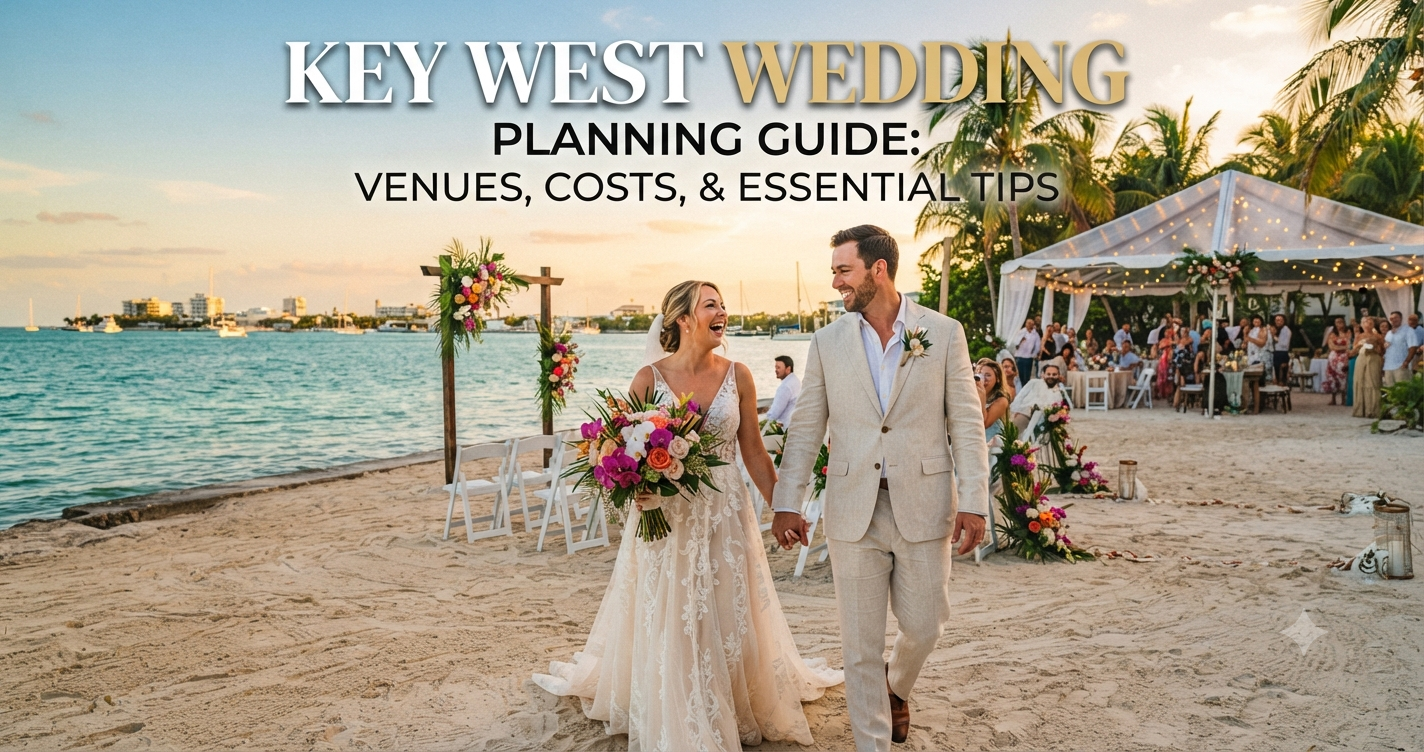
Key West is a small island with a lot of rules, a lot of weather, and a lot of competition for the same Saturday in February. Couples who plan a Key West wedding well tend to be the ones who understand the island’s logistics early, not the ones with the fanciest mood board. This guide walks through those logistics: where to hold the ceremony, what it will cost, and what to sort out before you book flights.
Start With the Calendar, Not the Venue
Most couples pick a venue first and a date second. In Key West it works better the other way around, because the date shapes everything else.
- December to April is the dry, comfortable stretch. It is also when hotels fill up, rates climb, and popular ceremony spots get booked far ahead.
- May to early June is warm and usually quieter, with more flexibility on vendors.
- June to November is hurricane season. Many couples still marry in the fall, but you need flexible travel plans and a backup location, and you should talk to your vendors about their weather policies before signing anything.
Choose your preferred months, then look at venues that are free in them.
Choosing Where You’ll Say “I Do”
Key West ceremonies generally fall into four types.
Beachfront. The beaches here are smaller and more public than people expect. Many have rules about setup size, amplified sound, and permits, so a “private beach ceremony” often means a short, simple one with a small group.
Historic gardens and old mansions. The island’s Victorian houses and tropical courtyards photograph well and give you shade, which matters more than you would think in an afternoon sun. They usually come with more structure around guest counts and vendor hours.
Waterfront resorts and sunset terraces. These are convenient when most of your guests are staying in the same place, since the ceremony, reception, and lodging are all within walking distance.
On the water. Boat and sandbar-style ceremonies are very Key West, but they depend on weather and sea conditions, so build in a plan B you would actually be happy with.
Two questions apply to every option: What is the permit situation for the location, and what happens if it rains at 4 p.m.?
What a Key West Wedding Realistically Costs
Prices vary enormously by season, guest count, and location, so treat the following as a framework for your budget, not a quote.
- Intimate elopement-style ceremony (2 to 10 people): often the most affordable route, since you are paying mainly for a location, an officiant, and perhaps photography.
- Small wedding (20 to 40 guests): costs rise quickly with catering, rentals, and lodging blocks.
- Full celebration (60+ guests): expect venue minimums, transport logistics, and higher vendor fees, since everything has to be brought to and set up on the island.
Island pricing carries a premium: staff, rentals, and supplies all have to travel. Common budget surprises include permit fees, service charges on top of venue or catering quotes, sound restrictions that require an earlier ceremony time, and the cost of getting guests between locations. Ask every vendor what is included and what is billed separately, and request quotes in writing.
A sensible rule is to keep roughly 10 to 15 percent of your budget unallocated for those extras.
The Legal Side, Simplified
Getting married in Florida requires a marriage license, which you obtain from a county clerk’s office. Couples marrying in Key West typically deal with Monroe County. Requirements, fees, ID rules, and waiting periods can differ depending on residency, so check current details with the clerk’s office before you travel and bring the required identification.
Your ceremony also needs someone authorized to perform it. A Key West wedding officiant can handle the legal paperwork, help shape the ceremony’s tone, and keep things moving if the weather or timing shifts. Ask potential officiants about their style (traditional, spiritual, humorous, nonreligious), whether they will personalize vows, and whether they travel to your chosen location.
Do You Need Help? Planner vs. Doing It Yourself
You can plan a destination wedding on your own, but distance makes every small task slower. A Wedding Planner in Key West earns their fee in the areas where remote couples struggle most: knowing which venues have realistic availability, which vendors are reliable, how permits work, and how to rearrange the day when conditions change.
A good question for any planner is how they handle contingencies. Their answer tells you whether they have lived through a rainy ceremony before.
If you have a smaller budget or a very simple ceremony, you might hire only part of the help you need. Many couples work with Key West Wedding Services such as ceremony coordination, photography, flowers, or day-of management, without engaging a full-service planner. That middle path suits elopements and micro-weddings well.
Practical Tips Nobody Mentions Early Enough
- Sun and heat are real. Schedule photos and ceremony times with shade and temperature in mind. Late afternoon usually beats midday.
- Wind affects more than hair. Veils, paper decor, and tall arrangements need to be secured or chosen with breezes in mind.
- Guest lodging fills first. Tell guests early, and consider booking a small room block if your group is more than a handful.
- Getting around is simple but limited. The island is walkable and bike-friendly, but parking is tight. Plan transport for older relatives and anyone in formal shoes.
- Island life includes roosters. They are charming, and they will make an appearance at least once. Bring a sense of humor.
- Pack your essentials in your carry-on. Rings, license documents, and the dress or suit should never ride in checked luggage.
A Simple Planning Timeline
- 9 to 12 months out: choose dates, set a budget, shortlist venues, and secure lodging.
- 6 to 8 months out: book your officiant, photographer, and planner or coordinator; send save-the-dates.
- 3 to 4 months out: finalize the menu, flowers, and ceremony details; confirm permits where needed.
- 1 month out: confirm all vendor timings in writing, review the weather plan, and finalize guest logistics.
- Arrival week: pick up your license if required, do a quick walk-through of the site, and confirm the schedule with each vendor.
Small and elopement-style weddings can compress this schedule considerably, though popular dates still need early booking.
Final Thoughts
A Key West wedding works best when you plan around the island instead of against it: respect the seasons, build in a weather plan, confirm legal requirements early, and bring in local expertise where it counts. Do that, and the result can feel relaxed, personal, and unmistakably tied to its setting. If you are still deciding whether a full celebration or a smaller getaway fits you better, our guide to the 10 Best Places to Elope in Florida for a Romantic Wedding can help you compare destinations before you commit.