
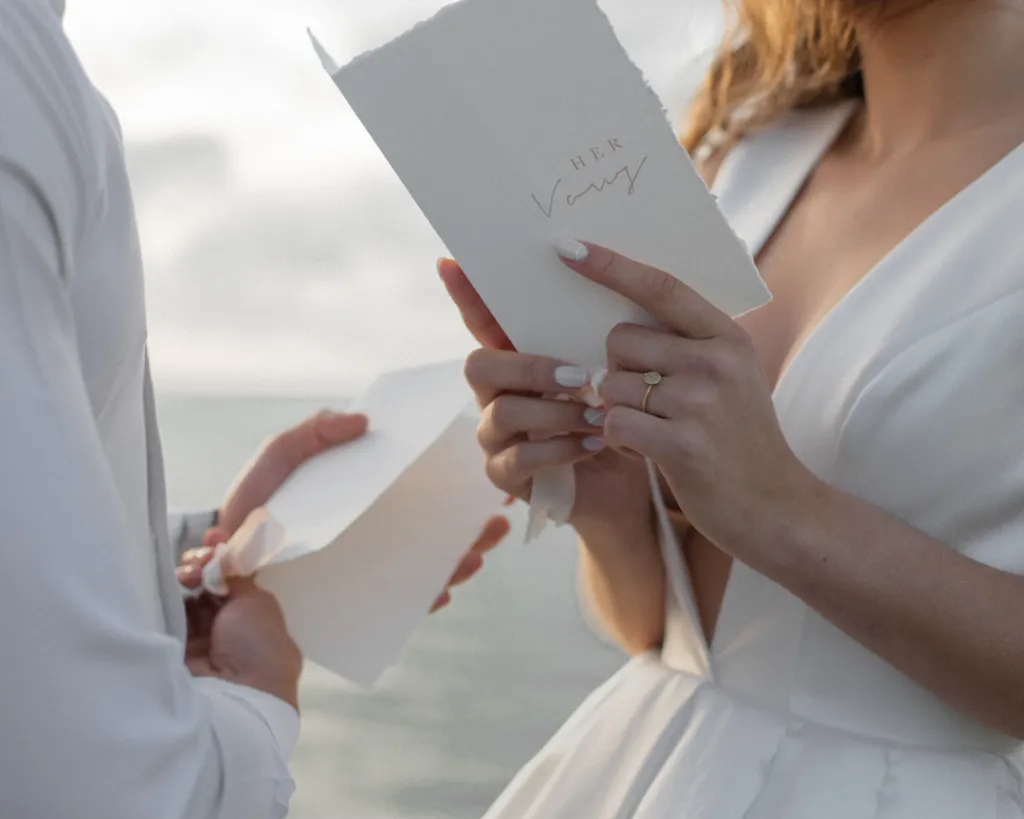
Every ceremony we officiate includes a set of prepared vows, and they’re good ones. But writing your own wedding vows almost always means more, because no one knows your relationship the way you two do. The vows you write to each other will carry a kind of meaning a standard script simply can’t match.
This guide covers why couples choose to write their own vows, how to actually get started when the page is blank, and a few practical tips to help you finish with vows that sound like you.
Why Write Your Own Wedding Vows
Writing your own wedding vows lets you say exactly what you mean, in your own words, instead of reciting a version that was written for someone else. That’s the short answer. The longer story is that personal vows tend to become one of the most talked about parts of a ceremony afterward, the moment guests remember, the words a couple looks back on years later. A prepared script is reliable, but it’s generic by design. Your own words carry the specific story only the two of you actually lived.
Start With a Letter, Not a Speech
If you’re staring at a blank page, don’t think of it as writing vows. Think of it as writing your partner a letter. Vows written as a speech tend to come out stiff and formal, reaching for language that doesn’t sound like either of you. A letter, on the other hand, comes naturally: you already know how to write to the person you love, you just haven’t done it in this particular format yet.
Start by writing down a few moments that mattered to you, how you met, a hard time you got through together, something small they do that you’ll never get tired of. Vows built from specific memories almost always land better than vows built from general statements about love.
What to Actually Include
Most personal vows work well when they touch on a few simple things:
- A specific memory or moment that shows why this relationship matters, rather than telling
- What you admire about your partner, stated plainly and honestly
- A promise or two, concrete rather than abstract, about how you intend to show up for them
- A line about the future, what you’re looking forward to building together
You don’t need all four in every set of vows, and you don’t need to write something poetic. Honest and specific will always beat polished and vague.
Keep Them Short
Vows don’t need to be long to be meaningful. Most couples find that one to two minutes, read aloud, is plenty, long enough to say something real, short enough that nerves don’t take over halfway through. If you’re not sure, read your draft out loud and time it. If it runs past two or three minutes, look for the parts that could be said in fewer words.
Practice, But Don’t Memorize
Read your vows aloud a few times before your ceremony so the words feel familiar in your mouth, not just on the page. You don’t need to memorize them. Most couples read their vows from a card or have their officiant hold a copy as a backup, and there’s no shame in that. The moment is about what you’re saying, not whether you said it from memory.
Let Us Help With the Rest
Whether you write every word yourself, borrow our prepared vows, or land somewhere in between, we build the ceremony around what feels right for you. Our wedding services include working with you on your ceremony script, so you’re never handed a template and left on your own to figure it out.
Frequently Asked Questions
Do we have to write our own wedding vows?
No. We include a set of prepared vows in every ceremony we officiate. Writing your own is entirely optional, though many couples find it adds a personal touch worth the effort.
How long should personal wedding vows be?
Most couples aim for one to two minutes when read aloud. That’s usually enough to say something meaningful without losing your audience or your nerve.
What if we get emotional while reading our vows?
That’s completely normal, and often expected. We recommend keeping a printed copy with your officiant as a backup, so if emotions take over, the ceremony can still move forward smoothly.
Can one partner write their own vows while the other uses the prepared version?
Yes. Some couples mix and match, one partner writing personal vows while the other uses our prepared version. There’s no rule that says you both have to do it the same way.
Conclusion
Writing your own wedding vows isn’t about finding the perfect words. It’s about saying something true, in your own voice, to the person you’re marrying.
If you’d like help thinking through your vows, or you’d rather use our prepared ceremony instead, Aaron’s Key West Weddings is here for either choice. Call 305-295-0137 or complete our contact form online to start planning your Key West ceremony.