
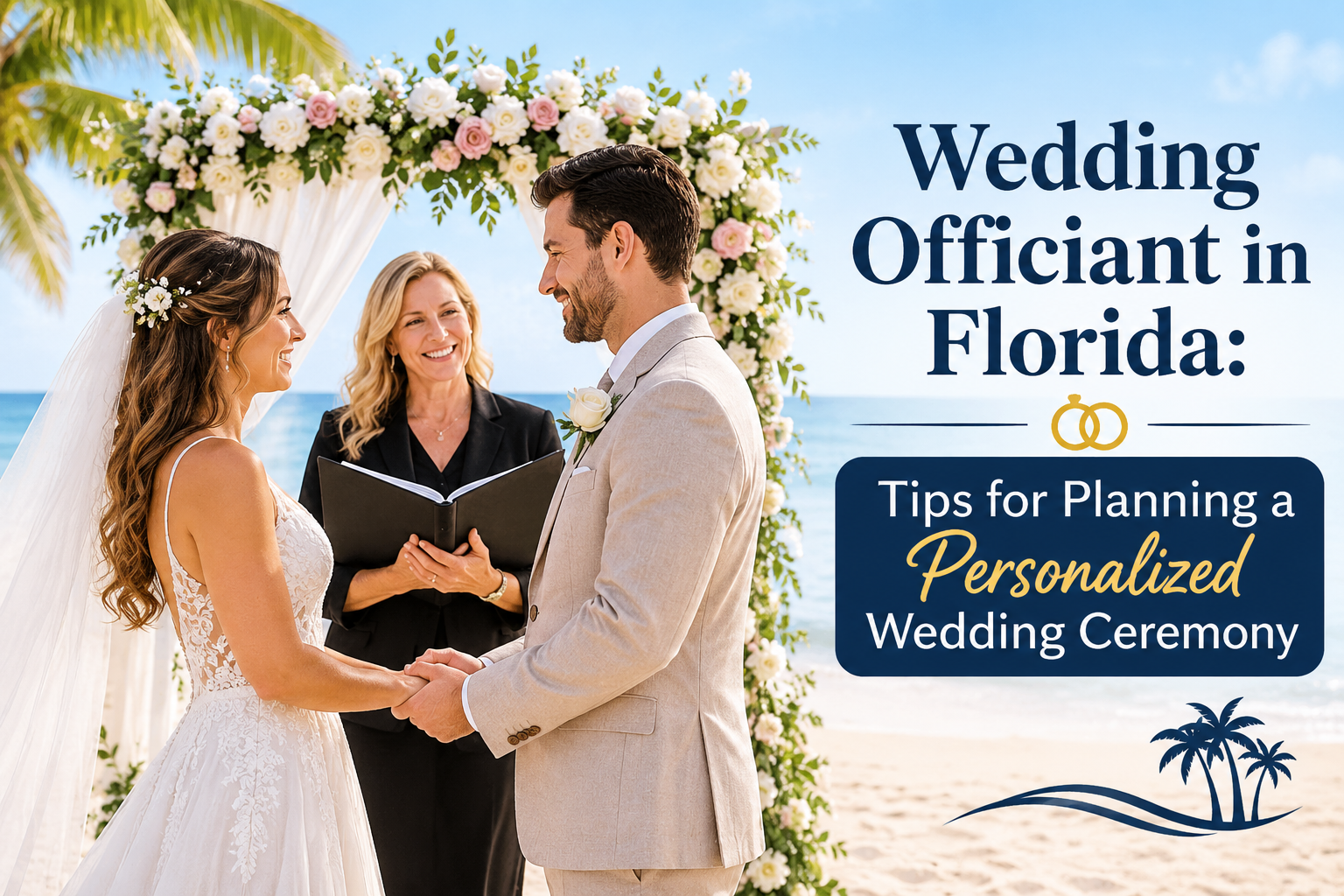
Ask a couple what they remember most from their wedding day, and the answer is rarely the centerpieces. It’s the ten or fifteen minutes when they stood face to face and said the words. That stretch of time is built, paced, and spoken by one person, which is why choosing a wedding officiant in Florida deserves more attention than it usually gets.
Many couples settle on the venue, the photographer, and the flowers, then grab whichever officiant is available. A better approach is to treat the officiant as a creative partner. Here is how to do that well.
Start with the feeling, not the format
Before you search for anyone, sit down together and answer one question: how should the room feel when we say “I do”?
Maybe you want laughter that makes your grandmother wipe her eyes. Maybe you want near silence, with only the sound of waves. Maybe you want something reverent, even if you’re not especially religious. A Wedding Ceremony Florida couples remember is usually one where the mood was decided early and everything else followed from it.
Once you have a feeling in mind, the format questions get easier. Should there be a reading? A ring blessing? A moment for your parents? You can answer those because you know what the ceremony is trying to do.
What a Florida officiant can actually be
Florida is flexible about who may solemnize a marriage. Ordained clergy, judges, and notaries public are among those the state recognizes, and many couples are surprised that a notary can legally perform the ceremony. A friend or relative can sometimes officiate as well, depending on how they’re authorized, and the details are worth checking before you commit.
This is a choice between legal authority and storytelling skill. A notary or minister who performs ceremonies every weekend will have timing and nerves under control. A close friend will bring intimacy, but may freeze at the microphone. Neither is wrong. Just be honest about which strength matters more to you.
Rules and paperwork can change, so confirm current requirements with the clerk of court in the county where you’ll apply for your license. Ask about timing, ID, and how long the license stays valid, especially if you’re traveling in from out of state or abroad.
Interview your officiant like you’d interview a speaker
A short phone or video call tells you more than any website. Skip “Are you available?” and ask things like:
- How do you build a ceremony for a couple you’ve just met? Good officiants have a process, such as a questionnaire, a call, or a draft you can edit.
- Can I see a sample script? You’re looking for warmth and variety, not one template with the names swapped.
- How do you handle a nervous groom, a crying bride, or a forgotten ring? Their calm answer is your preview of how they’ll act on the day.
- What happens if the weather turns? For any outdoor Wedding Ceremonies Florida allows, from beach sand to garden lawn, a sudden afternoon storm is a real possibility.
- Do you travel, and is that included in your fee? Distance to the Keys, a Gulf Coast beach, or a remote island can change the logistics.
Pay attention to how they listen. An officiant who asks about you before talking about themselves is usually one who’ll write a ceremony that sounds like you.
Give them real material to work with
The difference between a ceremony that feels generic and one that feels personal is almost always the raw material you hand over. Before your planning call, jot down:
- The moment you each knew this was serious. Not the proposal, the quieter moment before it.
- A habit of your partner’s that you’d miss immediately if it vanished.
- A promise you’d make that wouldn’t appear in a traditional script, such as “I’ll keep pretending to like your music in the car.”
- Anyone who should be acknowledged, including people who can’t be there.
Specific details beat grand statements. “You make coffee before I’m awake” lands harder than “You are my everything,” and a good officiant knows how to weave those details into the ceremony without making it feel like a roast.
Vows: write them apart, rehearse them together
If you’re writing your own vows, resist the urge to compare drafts. Write separately, then agree on rough length and tone so one of you isn’t reading for ninety seconds while the other reads for five minutes. Many officiants will gladly read your drafts and trim them.
Then say them out loud, standing up. Words that look lovely on paper can trip over your tongue. Read them to a friend, or record yourself and listen back. If a sentence makes you stumble twice, rewrite it.
Some couples prefer to repeat vows line by line after the officiant. That’s perfectly fine, especially if you expect to be emotional. Nobody in the audience will think less of it.
Match the ceremony to the setting
Florida gives you an unusually wide range of backdrops, and the setting should influence the script.
- A beach ceremony works best when it’s short. Wind carries voices away, and guests in direct sun get restless. Ask your officiant about a microphone or a sound setup.
- A garden or estate wedding can handle a longer, more layered ceremony, with readings, a unity ritual, or music between segments.
- A tiny elopement needs almost no structure, only the vows, the rings, and the legal declaration, so the personal touches matter even more.
If you’re still deciding where to say your vows, our guide to the 10 Best Places to Elope in Florida for a Romantic Wedding walks through settings that suit smaller, more intimate ceremonies.
Look at what’s bundled before you add on
Many couples looking at Wedding Packages in Florida find that the officiant is included alongside other services such as a photographer, a ceremony setup, a bouquet, or a permit. Bundling can simplify planning, but read the details before you sign:
- Is the officiant’s travel included, or billed separately?
- Does the package cover a rehearsal or a pre-ceremony planning call?
- Are you getting a personalized script, or a standard one with your names added?
- What happens if you need to reschedule because of weather?
A package is a good deal when it includes the pieces you would have bought anyway. It’s a poor one if you’re paying for extras you’ll never use.
Plan the paperwork early
The legal part is the least romantic and the easiest to forget. In general, you’ll apply for a marriage license through a county clerk, bring valid identification, and have the signed license returned for recording after the ceremony. Your officiant will usually tell you what to expect, but you’re ultimately responsible for making sure it’s handled correctly. Ask them who files it and when, then confirm you’ll receive a certified copy for name changes and official records.
Don’t leave this for the week of the wedding. A small hiccup with a document can turn a joyful weekend into a stressful scramble.
A short rehearsal goes a long way
Even a casual run-through helps. Ten minutes with your officiant to walk the aisle, decide where to stand, and practice the ring exchange removes most of the nerves. It also lets you hear the pacing out loud. If something drags, cut it now rather than during the real thing.
Pick the person, then trust them
The best personalized ceremony isn’t the one with the most rituals or the longest script. It’s the one where the officiant understands the two of you well enough to say exactly the right thing at exactly the right moment. When you search for a wedding officiant in Florida, look for that quality first: attentiveness, warmth, and a willingness to build the ceremony around your story rather than the other way around.
Do that, and the rest of your wedding day will have something steady at its center.