
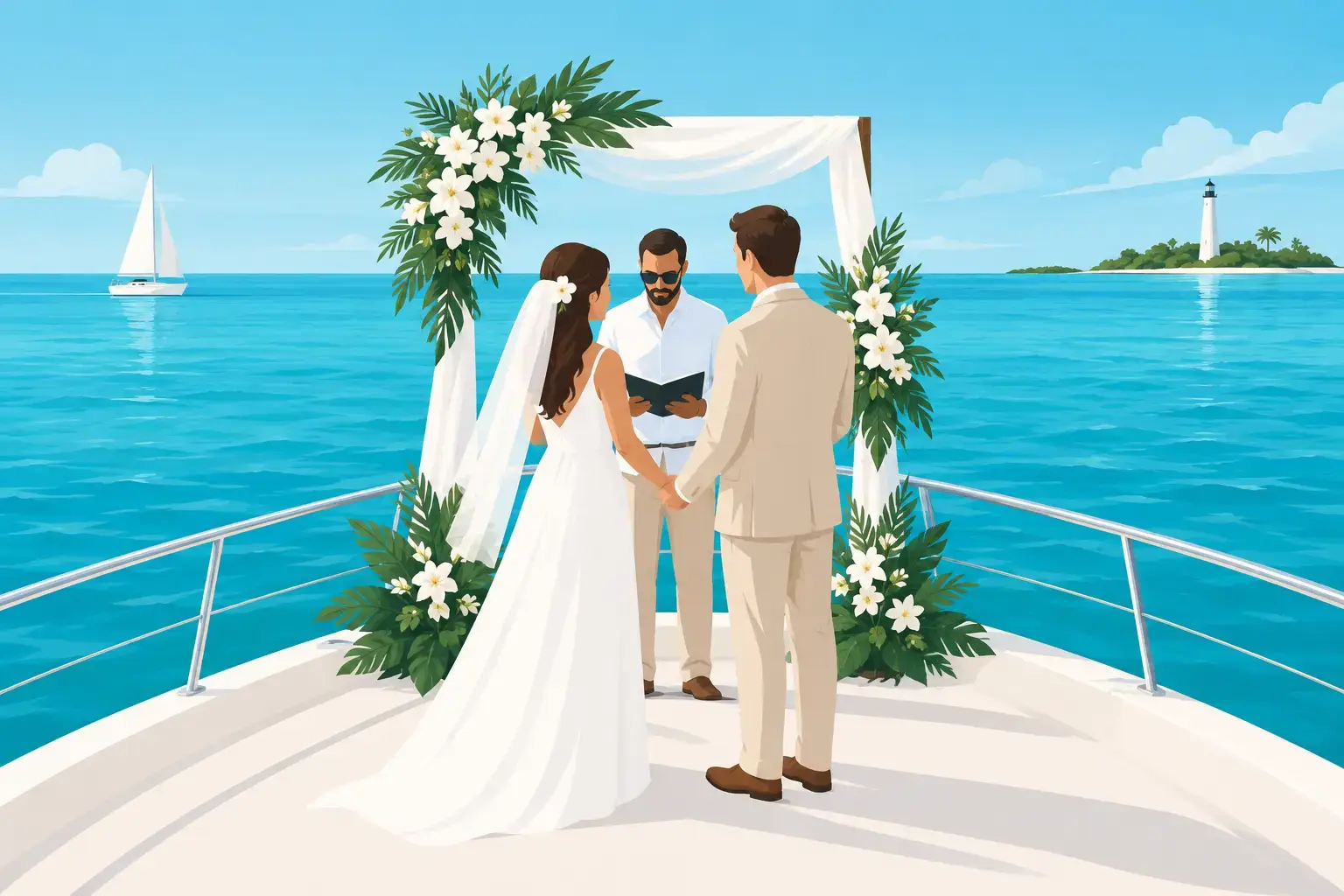
The moment a boat leaves the harbor, the Florida Keys take on a different kind of magic. The shoreline softens in the distance, the water opens around you, and your ceremony becomes part of the sunset rather than simply set beside it. An at sea wedding ceremony Florida Keys couples choose can be wonderfully intimate, beautifully relaxed, and far easier to plan when the right details are handled ahead of time.
For some couples, that means exchanging vows with just the captain, an officiant, and the horizon nearby. For others, it means inviting close family and friends aboard for champagne, photographs, music, and a sunset cruise after the ceremony. There is no single right version. The best experience is the one that fits your guest count, comfort level, and vision for the day.
Why an At Sea Wedding Ceremony in the Florida Keys Feels Different
A beach wedding gives you sand beneath your feet and the ocean in front of you. A ceremony at sea gives you movement, privacy, and a view that changes by the minute. The water catches the late-day light, nearby islands create a scenic backdrop, and there is a wonderful sense that the rest of the world has fallen away.
It is an especially fitting choice for couples who want a true Key West experience without a large traditional venue. A charter boat can create an intimate setting for an elopement, a small destination wedding, or a meaningful vow renewal. It can also be a thoughtful choice for couples who prefer a setting with fewer bystanders than a public beach.
That said, a boat ceremony is not simply a beach ceremony on the water. Space, weather, boarding, guest mobility, and timing all matter. Thoughtful planning makes those practical details feel easy rather than distracting.
Start With the Boat and the Guest Experience
The boat should fit the occasion, not just the number of people on the guest list. A smaller vessel may be perfect for a couple and a few loved ones, while a larger charter offers more room for seating, photography, refreshments, and a relaxed reception-style cruise. Every vessel has a passenger limit, so settle the guest count before making promises or sending invitations.
Think honestly about who will be aboard. Guests who are comfortable on a dock may still find boarding, stairs, wind, and gentle movement challenging. Older relatives, young children, and anyone prone to motion sickness deserve consideration. An at-sea ceremony can absolutely include them, but it may call for a larger, steadier boat, a shorter cruise, or a ceremony held dockside before a celebratory sail.
The length of the charter matters, too. A simple ceremony can happen within a short cruise, but a little extra time changes the pace of the experience. It gives everyone time to board without rushing, allows the captain to reach a scenic area, and leaves room for photographs after the vows. If sunset is part of the plan, allow enough flexibility for the light to be beautiful without treating the exact minute of sunset as the only possible ceremony time.
Choose a Time That Works With Light, Wind, and Tides
Sunset is popular for good reason. The Keys sky can turn soft pink, gold, and coral, and the lower afternoon temperatures are often more comfortable than midday heat. A sunset charter also naturally lends itself to a celebratory toast as the ceremony ends.
Still, earlier ceremonies have advantages. Morning water is often calmer, guests are fresher, and the bright tropical light has a clean, cheerful quality. A late-morning ceremony may be especially appealing for couples who want an intimate lunch afterward rather than an evening event.
Wind and weather are part of life in the Florida Keys. An experienced local boat captain and wedding professional will watch conditions closely, but couples should build flexibility into the plan from the beginning. Ask what happens if the water is rough, rain moves through, or conditions are not suitable for the planned route. A covered area aboard the vessel, a dockside alternative, or a nearby land-based backup can protect the heart of the day.
A weather adjustment is not a failed wedding plan. It is simply good Florida Keys planning. The goal is a memorable ceremony, not a stressful effort to control the sky.
Handle the Marriage License and Officiant Details Early
A Florida marriage license is required for a legal marriage ceremony in the state. Couples do not need to be Florida residents to obtain one, and a license issued by any Florida county can be used anywhere in Florida. Because requirements, appointment availability, waiting periods, and documentation can vary based on your circumstances, confirm current instructions directly with the Clerk of Court before travel.
For an at-sea ceremony, it is wise to keep the legal portion clear and uncomplicated. The officiant should be authorized to solemnize marriages in Florida, and the ceremony should be planned in a way that supports the legal requirements of the marriage license. Do not assume that a boat captain can legally officiate simply because they are leading the charter.
Many couples choose to complete the license process before the wedding day, then bring it safely aboard in a protected folder. Assign one dependable person to keep track of it, or have the officiant manage it. Salt spray, wind, and loose paperwork do not mix well.
Aaron’s Key West Weddings can help couples understand the ceremony side of the planning process, coordinate an authorized officiant, and create a ceremony that feels personal whether it includes two people or twenty.
Make the Ceremony Personal Without Overloading the Boat
The natural setting already does a great deal of the decorating for you. There is usually no need for heavy arches, large floral installations, or complicated décor that must be carried down a dock and secured on a moving vessel. A bouquet, boutonniere, light florals, or a simple keepsake item can add meaning without creating clutter.
Your words matter more than elaborate details. Personalized vows, a short reading from a family member, a ring exchange, or a meaningful song can make the ceremony distinctly yours. If you are bringing a speaker or live musician, confirm the boat’s power and space limitations first. On a breezy day, an unplugged ceremony with a strong, clear officiant may work better than equipment competing with the wind.
Attire deserves a practical touch as well. Lightweight fabrics, secure footwear for boarding, and hairstyles that can handle a breeze will make everyone more comfortable. Long veils and flowing dresses photograph beautifully on the water, but they should be secured thoughtfully. A little wind can look romantic. A veil wrapped around a guest is less charming.
Plan Photography Around the Water
At sea, photographs are not limited to the ceremony itself. The cruise to the ceremony location, the first moments after the vows, a champagne toast, and the changing sky can all become part of the visual story. Let your photographer know the boat itinerary and the time you hope to exchange vows so they can plan for the best available light.
Keep in mind that a boat moves, guests shift, and the horizon is bright. A photographer familiar with outdoor weddings can work with those conditions, but they need room to move safely. Avoid crowding the ceremony area with bags, coolers, décor, or too many people standing directly behind the couple.
If you want a few quiet portraits, schedule them before guests board or after the ceremony while everyone enjoys a drink or looks out at the water. Ten unrushed minutes can make a real difference.
Create a Comfortable Plan for Guests
Clear communication is one of the kindest things you can offer guests. Tell them where to park, when boarding begins, what kind of footwear makes sense, whether food and drinks will be available, and how long the charter will last. Encourage anyone concerned about seasickness to prepare in advance.
For a small gathering, simplicity often feels best: arrive, board, cruise, exchange vows, toast, and enjoy the sunset. For a larger group, you may want to arrange transportation, refreshments, music, and a dinner reservation or reception location on shore afterward. The right level of coordination depends on whether the boat is the entire celebration or the meaningful opening chapter of a longer wedding day.
An at-sea wedding does ask everyone to be a little flexible. There may be wind in the microphone, a passing boat in the distance, or an unexpected splash on the deck. Those small, unscripted moments are often the ones couples remember with the most affection.
Let the Florida Keys Set the Tone
An at-sea ceremony is not about staging a perfect postcard. It is about standing together in a place that feels expansive, joyful, and unmistakably your own. With a boat that suits your group, a dependable ceremony plan, and room for weather to be weather, the water becomes more than a backdrop. It becomes part of the promise.
Choose the details that matter most to you, then leave space for the sunset, the sea breeze, and the people you love to make the day feel alive.